The common mistake: people trade USO as if it is crude oil.
By Michael Hart · June 14, 2026
Category: how-financial-instruments-work
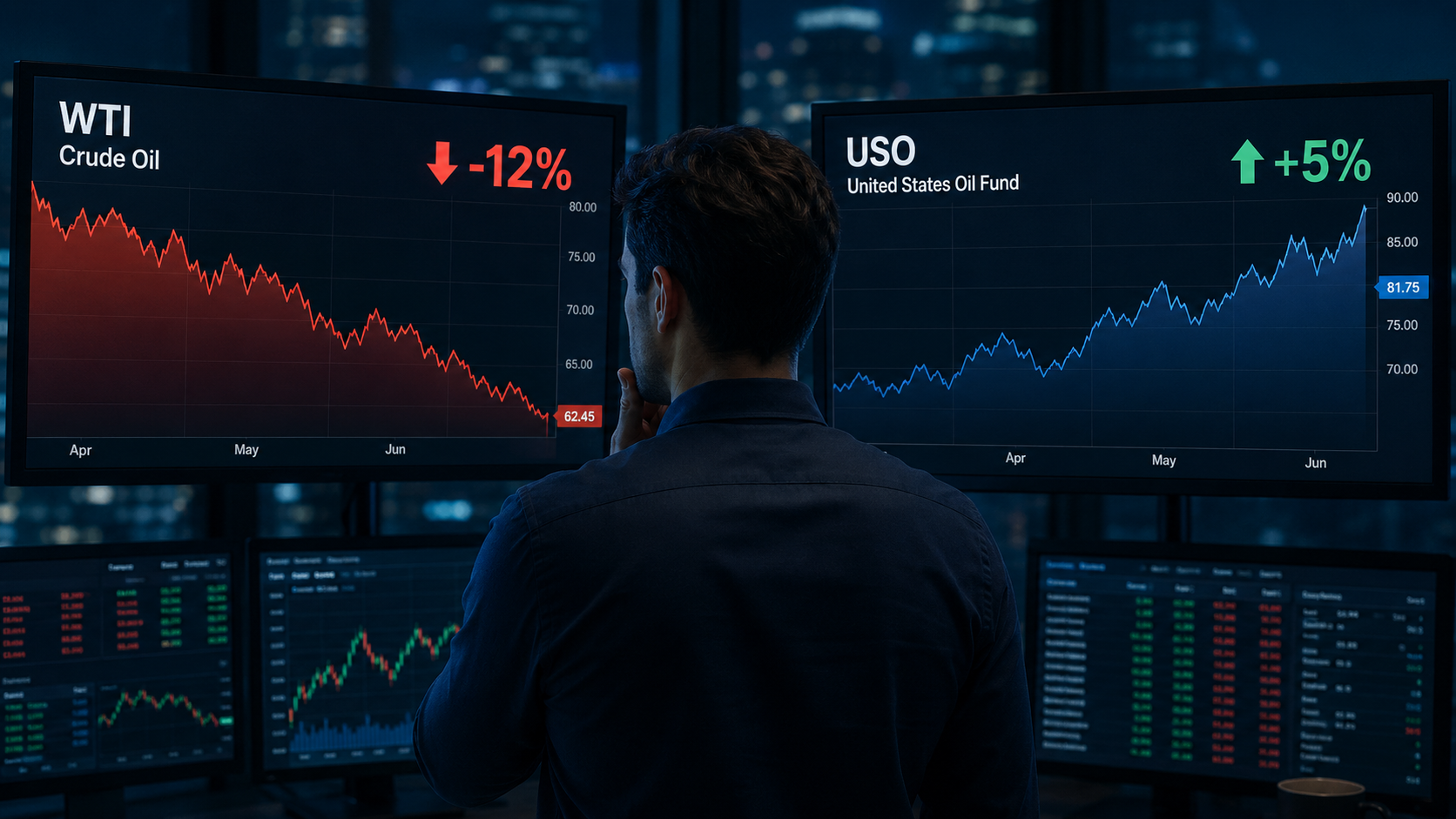
USO tracks oil futures, not oil - and the difference can cost you 20% even when you're right about oil's direction.
Key takeaways
The problem Investors trade USO expecting oil exposure but get futures rolling costs instead.
Core insight USO's performance equals oil price change plus roll yield from monthly contract switches.
Practical outcome Check futures curve shape before trading USO, not just oil price direction.
USO tracks oil futures, not oil. When crude oil fell 15% over the last three months, USO gained 5% - a 20-point spread that broke every investor who thought they were buying oil exposure.
Why USO Isn't Oil
USO holds futures contracts that expire every month. When December crude costs $75 and January costs $77, USO must sell the December contract at $75 and buy January at $77. That $2 loss happens whether oil goes up or down.
This is contango - when future contracts cost more than near-term ones. The opposite is backwardation, where January costs less than December. Most of the time, oil futures trade in contango.
USO's return formula: Oil price change + roll yield
In contango, roll yield is negative. In backwardation, it's positive. USO can lose money even when oil rises if the roll cost exceeds the price gain. The fund bleeds money on every monthly roll in contango markets.
What Rising Oil Prices Mean for USO
Oil up + backwardation: USO outperforms oil by capturing positive roll yield
Oil up + contango: USO underperforms oil due to negative roll yield
Oil up + steep contango: USO can still lose money despite rising oil prices
In backwardation, USO rolls from expensive short-term contracts to cheaper long-term ones, pocketing the difference. In contango, USO does the opposite - selling cheap and buying expensive every month. The steeper the contango, the bigger the drag on returns.
Case in Point
The recent three-month period demonstrates USO's fundamental disconnect from oil prices. While WTI crude fell around 15%, USO delivered positive returns of approximately 5%. The 20-point spread represents pure roll yield - the profit USO captured by rolling from expensive short-term contracts to cheaper long-term ones in a backwardated market.
An investor who shorted USO expecting it to follow oil's decline would have faced losses on both the underlying position and the negative roll yield working against them. Being right about oil's direction meant nothing for USO's performance.
Common Mistakes Readers Make Here
Check the futures curve before trading USO, not just oil's spot price. The relationship between contract months determines USO's performance more than oil's daily moves.
Small daily roll costs compound into massive tracking errors over time. A 2% monthly contango drag becomes a 24% annual headwind that no oil price appreciation can overcome.
Physical oil and oil futures are different instruments. Storage costs, transportation, and financing create spreads between spot and futures prices that USO must navigate monthly.
The Bottom Line
USO is a futures-rolling strategy disguised as an oil fund. Its performance depends on both oil prices and the shape of the futures curve. Before trading USO, check whether contracts are in contango or backwardation - that spread matters more than your oil price forecast. You're not betting on oil; you're betting on the mathematics of monthly contract rolls.
This article is for informational purposes only and should not be considered personalized investment advice. Please consult with a financial advisor before making investment decisions.
Frequently Asked Questions
Why doesn't USO track oil prices exactly?
USO holds oil futures contracts that expire monthly, not physical oil. When contracts roll over, the price difference between expiring and new contracts (contango or backwardation) creates tracking error that can overwhelm oil price movements.
What is contango and how does it affect USO?
Contango occurs when future oil contracts cost more than near-term ones. USO must sell cheap expiring contracts and buy expensive new ones each month, creating negative roll yield that drags down returns even when oil prices rise.
Can USO lose money when oil prices go up?
Yes. If oil futures are in steep contango, the negative roll yield from monthly contract rollovers can exceed oil's price gains. USO bleeds money on each roll regardless of oil's direction.
How much tracking error can USO have versus oil?
Significant. Recent data shows USO gained 5% while oil fell 15% - a 20-point spread. Over longer periods, tracking error can exceed 50% as roll costs compound monthly.
Should I use USO to trade oil price movements?
Only if you understand futures curve dynamics. Check whether contracts are in contango or backwardation first. Many successful oil trades fail in USO due to negative roll yield overwhelming price gains.